Relieves occasional constipation
As a saline laxative, magnesium citrate draws water into the intestine, softening stool and prompting a bowel movement, usually within 30 minutes to 6 hours of a full dose.
Saline Laxative · Bioavailable Mineral Supplement
Magnesium citrate pairs elemental magnesium with citric acid to form a compound your gut absorbs far better than plain magnesium oxide. In higher doses it relieves occasional constipation; in lower daily doses it helps replace a mineral most diets fall short on. This guide breaks down exactly how it works, how much to take, what to look for on a label, and when to avoid it.

About the Compound
Magnesium citrate is a magnesium salt of citric acid, formed when magnesium carbonate or magnesium hydroxide is combined with citric acid. The reaction produces a compound that dissolves cleanly in water, which is the main reason it behaves so differently in the body than chalkier magnesium salts like oxide.
Because the citrate carrier keeps magnesium in solution through the stomach and small intestine, a larger share of the dose is available for absorption. That solubility is also what gives magnesium citrate its dual identity: at supplement-level doses it works its way into the bloodstream to support normal nerve, muscle and enzyme function; at higher, laxative-level doses, the fraction that stays in the gut draws water into the intestine and triggers a bowel movement.
Quick answer
Magnesium citrate is magnesium bound to citric acid. It is sold as an over-the-counter saline laxative for occasional constipation and, at lower doses, as a daily supplement for magnesium intake.
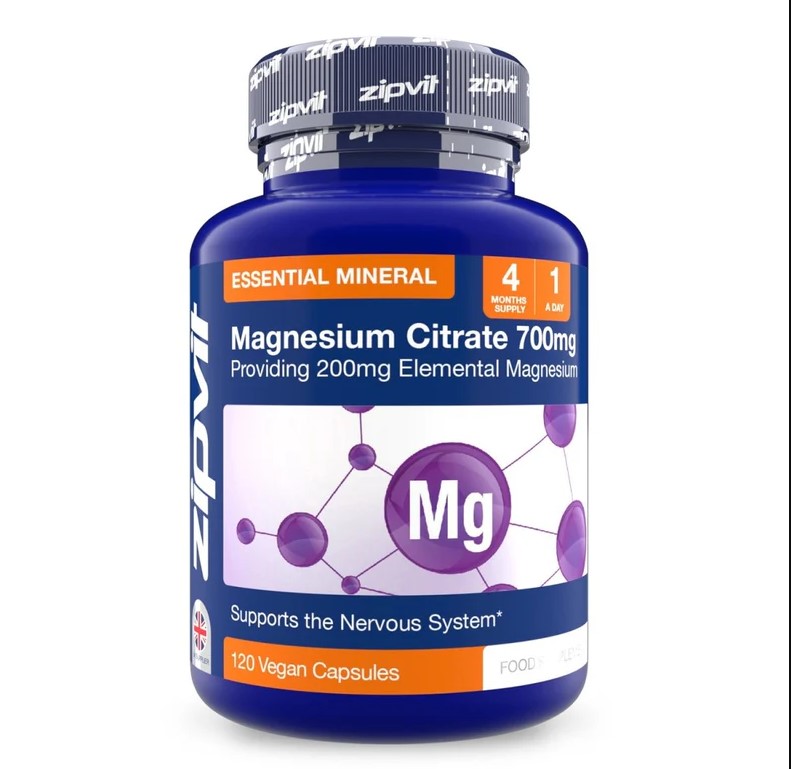
Each molecule of magnesium citrate contains magnesium ions loosely attached to a citrate backbone. In water it separates into free magnesium ions and citrate, which is why liquid and powdered forms act faster than tablets that still need to dissolve.
Manufacturers make dozens of magnesium compounds — oxide, citrate, glycinate, malate, sulfate and more — by pairing magnesium with different carrier molecules. Citrate sits in the middle: better absorbed than the cheap inorganic salts, and less expensive than the amino-acid chelates.
Citric acid is a weak organic acid the body already recognizes as part of normal metabolism. Attaching magnesium to it improves solubility without introducing an unfamiliar ingredient, which is one reason citrate has a long history as an over-the-counter laxative.
Magnesium citrate is roughly 11–16% elemental magnesium by weight, so a 1,000 mg dose of the compound supplies somewhere around 110–160 mg of actual magnesium. Always check the supplement facts panel rather than the front-label number.
Why Choose Magnesium Citrate
Magnesium is involved in several hundred enzymatic reactions, and citrate is one of the more efficient ways to deliver it. Here is what the research and clinical use consistently point to.
As a saline laxative, magnesium citrate draws water into the intestine, softening stool and prompting a bowel movement, usually within 30 minutes to 6 hours of a full dose.
Because it stays in solution, a meaningfully larger share of a magnesium citrate dose reaches the bloodstream compared with poorly soluble oxide, which mostly passes through unabsorbed.
Magnesium regulates the contraction and relaxation cycle in muscle tissue and helps nerves transmit signals normally, which is why deficiency is linked to cramping and twitching.
Doctors commonly prescribe a magnesium citrate solution the day before a colonoscopy or similar procedure because it empties the colon reliably within a predictable window.
Alongside calcium and vitamin D, adequate magnesium intake plays a supporting role in maintaining bone structure over the long term.
Because it works osmotically rather than by irritating the bowel wall, magnesium citrate tends to produce a more natural bowel movement with less cramping than stimulant-type products.
Mechanism of Action
The laxative effect follows a predictable sequence. Understanding it helps explain both the timing and the common side effects.
In the stomach and small intestine, magnesium citrate dissolves and releases free magnesium ions.
Unabsorbed magnesium ions create osmotic pressure that pulls water from surrounding tissue into the bowel.
The added water increases stool volume and softness, making it easier to pass.
The increased volume stretches the intestinal wall, triggering muscle contractions that move stool along.
A bowel movement typically occurs within 30 minutes to 6 hours after a full laxative dose.
At lower, non-laxative doses, most of the magnesium is absorbed before it can pull enough water into the bowel to cause a strong effect, which is why daily supplement doses generally do not cause the same reaction.
Form Comparison
Every magnesium compound is a trade-off between how much elemental magnesium it carries and how well the body absorbs it. Here is how citrate compares with the other common forms.
| Form | Elemental Mg (approx.) | Relative absorption | Laxative effect | Typically used for |
|---|---|---|---|---|
| Magnesium citrate | 11–16% | Good — well soluble | Moderate to strong at higher doses | Constipation relief, general supplementation, bowel prep |
| Magnesium oxide | ~60% | Low — poorly soluble | Strong (bulk/osmotic) | Occasional constipation, low-cost dosing |
| Magnesium glycinate | ~14% | Good — chelated, gentle on the gut | Minimal | Daily supplementation, sensitive stomachs, sleep support |
| Magnesium malate | ~15% | Good — comparable to citrate | Mild | Muscle support, general supplementation |
| Magnesium sulfate (Epsom salt) | ~10% | Low when taken orally | Strong | Occasional laxative use under guidance, topical soaking |
Elemental magnesium content and absorption vary by product, dose and individual physiology. Figures above are commonly cited ranges, not guarantees for any specific brand — always check the supplement facts panel.
Dosage & Administration
The right dose depends entirely on why you are taking it. These are general ranges reported for adults — always follow the label on your specific product or your provider's instructions.
| Purpose | Typical adult amount | Common form | Timing |
|---|---|---|---|
| Occasional constipation | ~10–30 g of magnesium citrate (a standard bottle of liquid solution) | Liquid solution | Single dose, chilled, with a full glass of water |
| Magnesium deficiency / daily support | 200–400 mg magnesium citrate | Tablet, capsule or powder | Divided into 2–3 doses through the day |
| Bowel preparation before a procedure | As directed by your provider, often a full bottle the evening before | Liquid solution | Evening before the procedure, per instructions |
For constipation relief, evening dosing lines up the effect with a morning bowel movement. For relaxation or sleep support, evening is also preferred. For muscle recovery after exercise, some people prefer a morning or post-workout dose.
Liquid solutions act fastest and are the standard laxative format. Powder can be mixed into water for a flexible dose. Tablets and capsules are the easiest way to take a consistent daily amount.
Pediatric and geriatric dosing should always be set by a healthcare provider based on age, weight and kidney function rather than a standard adult label.
Buying Guide
Bottles labeled "magnesium citrate" are not interchangeable. Here is what actually separates a well-made product from a mediocre one.

The front label often shows the total compound weight, not the usable mineral. Look at the supplement facts panel for the actual elemental magnesium in milligrams.
Choose a liquid solution for laxative use and a tablet, capsule or powder for ongoing daily supplementation.
Seals such as USP, NSF Certified for Sport, or an independent lab's certificate of analysis indicate the product was verified for purity and potency.
Artificial dyes, excess sweeteners or bulking agents add little value. A short, recognizable ingredient list is generally a good sign.
Products made in a current Good Manufacturing Practice facility are produced under consistent quality and documentation standards.
Divide the price by the total elemental magnesium in the bottle, not by the pill count, to compare value fairly across brands.
Build Materials & Quality Control
The mineral itself is only part of the product. Sourcing, manufacturing and packaging materials all affect purity, stability and how well the supplement performs on the shelf and in your body.
Reputable manufacturers combine food-grade citric acid with a magnesium source such as magnesium carbonate or hydroxide under controlled conditions to form a consistent, pharmaceutical- or food-grade magnesium citrate compound.
Quality producers manufacture in cGMP-certified, FDA-registered facilities, which require documented processes, equipment calibration and batch traceability from raw material to finished bottle.
Capsule shells are commonly made from either gelatin or a plant-based cellulose (HPMC) for vegetarian formulations. Finished products are typically packaged in HDPE or amber glass bottles with a desiccant to limit moisture, since magnesium citrate can absorb humidity over time.
Because the compound is hygroscopic, proper sealing and dry storage conditions during manufacturing and at home help the product maintain its labeled potency until the expiration date.

4
common contaminants screened in third-party heavy-metal testing: lead, arsenic, cadmium, mercury
100%
batch documentation expected under cGMP manufacturing, from raw material to finished product
Safety & Precautions
Magnesium citrate is considered safe for most healthy adults when used as directed, but it is not risk-free for everyone.
These can be signs of hypermagnesemia (excess blood magnesium), which is rare in people with healthy kidneys but requires prompt medical care.
Magnesium citrate can reduce the absorption of tetracycline and fluoroquinolone antibiotics, bisphosphonates, and some diuretics. Separate doses by at least a few hours and confirm timing with a pharmacist.
What Buyers Report
Rather than fabricate individual testimonials, we summarize the recurring themes reported across publicly available product reviews so you know what to expect before you buy.
Illustrative summary of commonly reported sentiment across magnesium citrate products, not a rating of one specific brand.
Positive theme
Buyers frequently note that the liquid formula works predictably overnight, calling it a reliable option before a procedure or a rough constipation stretch.
Positive theme
Capsule and tablet users often mention fewer digestive complaints than they had with magnesium oxide products at a similar elemental dose.
Common complaint
The taste and sweetness of ready-to-drink liquid solutions is a recurring criticism, which is why chilling the bottle before drinking is a widely repeated tip.
Common complaint
Some reviewers report cramping when a full laxative dose is taken on an empty stomach, and suggest easing in with water or a smaller amount first.
Frequently Asked Questions
Magnesium citrate is used two ways: as a short-term saline laxative for occasional constipation and bowel preparation before procedures, and in lower doses as a daily supplement to correct or prevent magnesium deficiency.
A laxative dose typically produces a bowel movement within 30 minutes to 6 hours, which is why it is often taken in the evening for a morning result.
Adult liquid formulations are commonly taken as a single dose of roughly 150 to 300 mL (about 10 to 30 grams of magnesium citrate), always followed by a full glass of water. Product labels vary, so follow the specific directions on your bottle or your healthcare provider's guidance.
Low-dose supplements (around 200 to 400 mg daily, divided into two or three doses) are commonly used long term. Full laxative doses are intended for occasional use only and are not meant for daily bowel management without medical supervision.
Oxide contains more elemental magnesium by weight but is absorbed far less efficiently, so much of it stays in the gut and acts as a bulk laxative. Citrate contains less elemental magnesium per gram but is absorbed considerably better, making it a more practical choice for raising body magnesium levels.
At laxative doses, loose stool is the expected effect, since it works by drawing water into the intestine. At lower supplement doses, diarrhea usually signals the dose is too high for your tolerance and should be reduced.
In people with normal kidney function, it is generally well tolerated. People with moderate to severe chronic kidney disease should avoid it unless a doctor supervises use, because impaired kidneys cannot clear excess magnesium efficiently.
Magnesium is an essential nutrient during pregnancy, but any supplement should only be started during pregnancy or breastfeeding after checking with an obstetrician or midwife, since individual dosage needs and interactions can vary.
For constipation relief, evening dosing is common so the effect occurs by morning. For general supplementation, it can be taken at any consistent time; some prefer evening doses since magnesium can support muscle relaxation and sleep quality.
Liquid acts fastest and is standard for bowel preparation. Powder dissolved in water is flexible for dose adjustment. Tablets and capsules are most convenient for consistent daily supplementation. The best choice depends on whether your goal is quick relief or steady daily intake.
Yes. It can reduce the absorption of tetracycline and fluoroquinolone antibiotics, and can interact with bisphosphonates and some diuretics. Separate dosing times and consult a pharmacist or doctor if you take regular medication.
Ready When You Are
Compare forms and doses, then check current options and pricing.
Shop NowThis link goes to Amazon search results and opens in a new tab. As an Amazon affiliate we may earn from qualifying purchases.